Dramaturgy Resource Guide for
Troilus and Cressida
Directed by Carolyn Howarth
Utah Shakespeare Festival, 2026
This resource is a living document that will grow through the rehearsal process. Always feel free to check back for more information. If you would like to see additional resources here, please just reach out! lezliecross@yahoo.com

Text Resources
Schmidt’s Lexicon
David Crystal’s Shakespeare’s Words
OpenSourceShakespeare Concordance
Troilus and Cressida First Folio Facsimile
Marjorie Garber on Troilus and Cressida
Timeline
This chart is a timeline of the events of the play.
(this one is fast, y’all!)
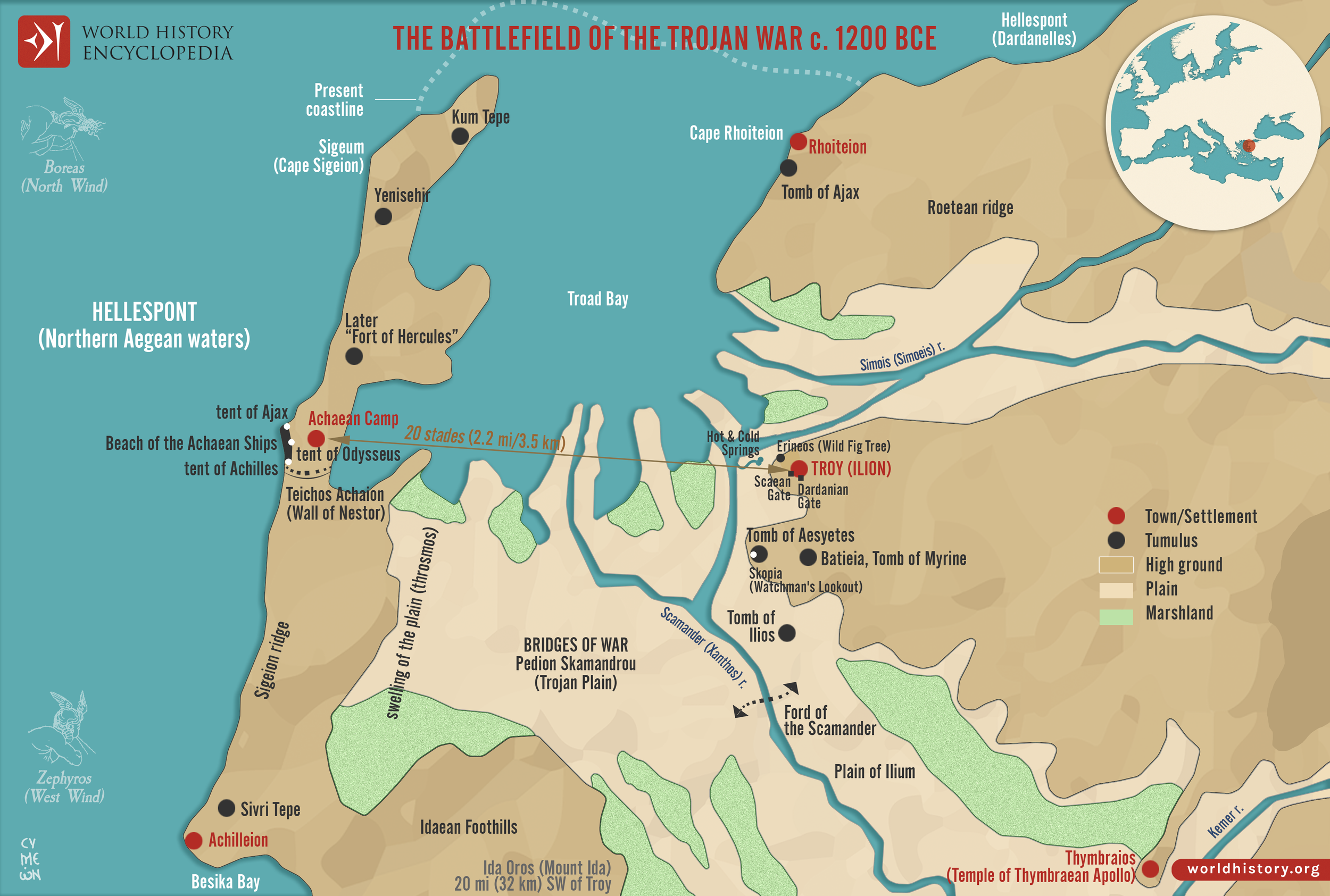
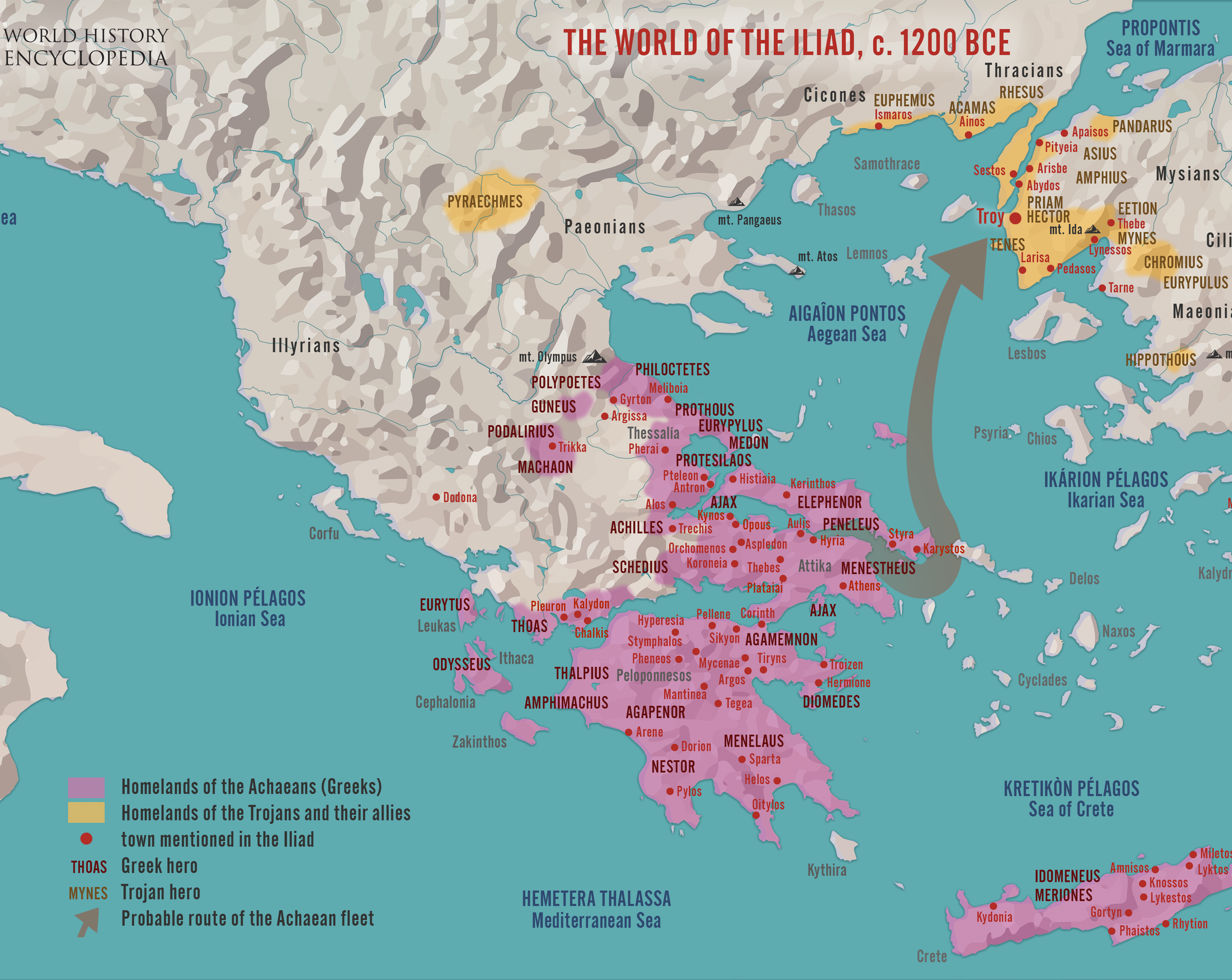
“In Troy there lies the scene”
The action of Troilus and Cressida moves between the Greek camp and Troy. But where exactly are we?
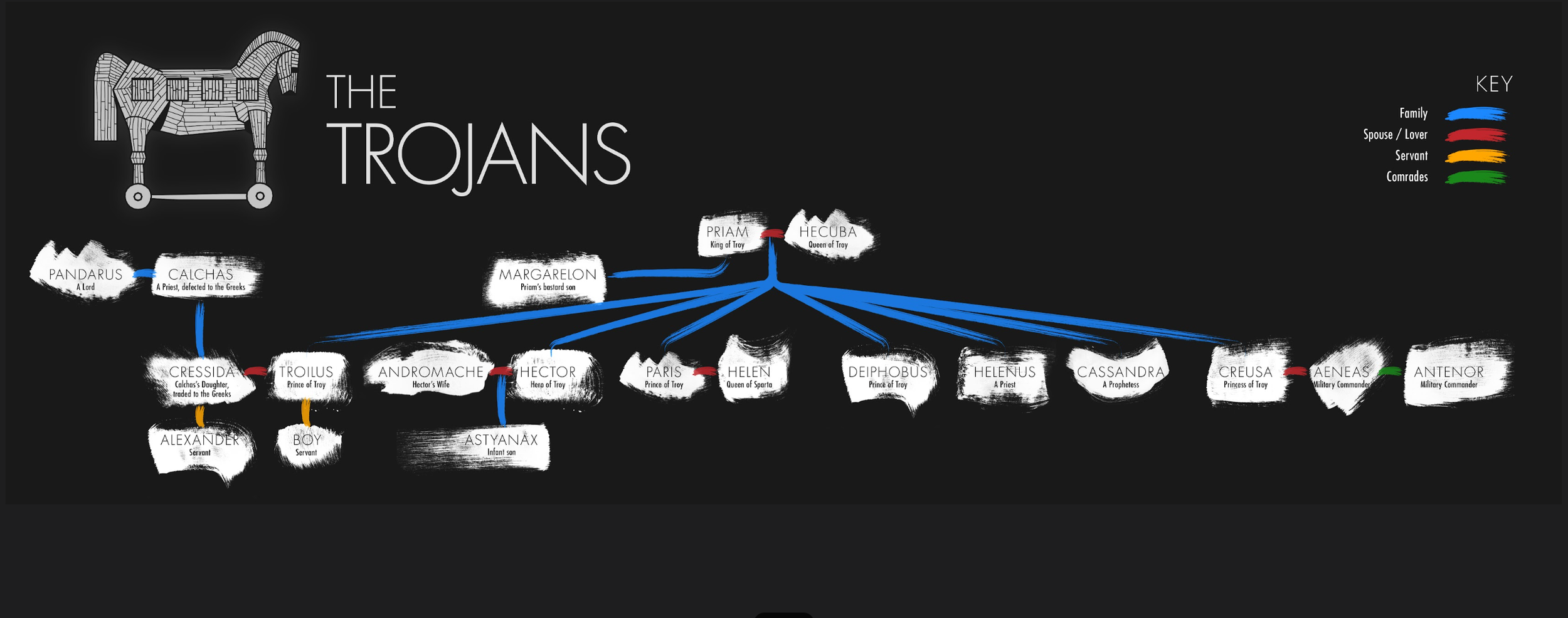
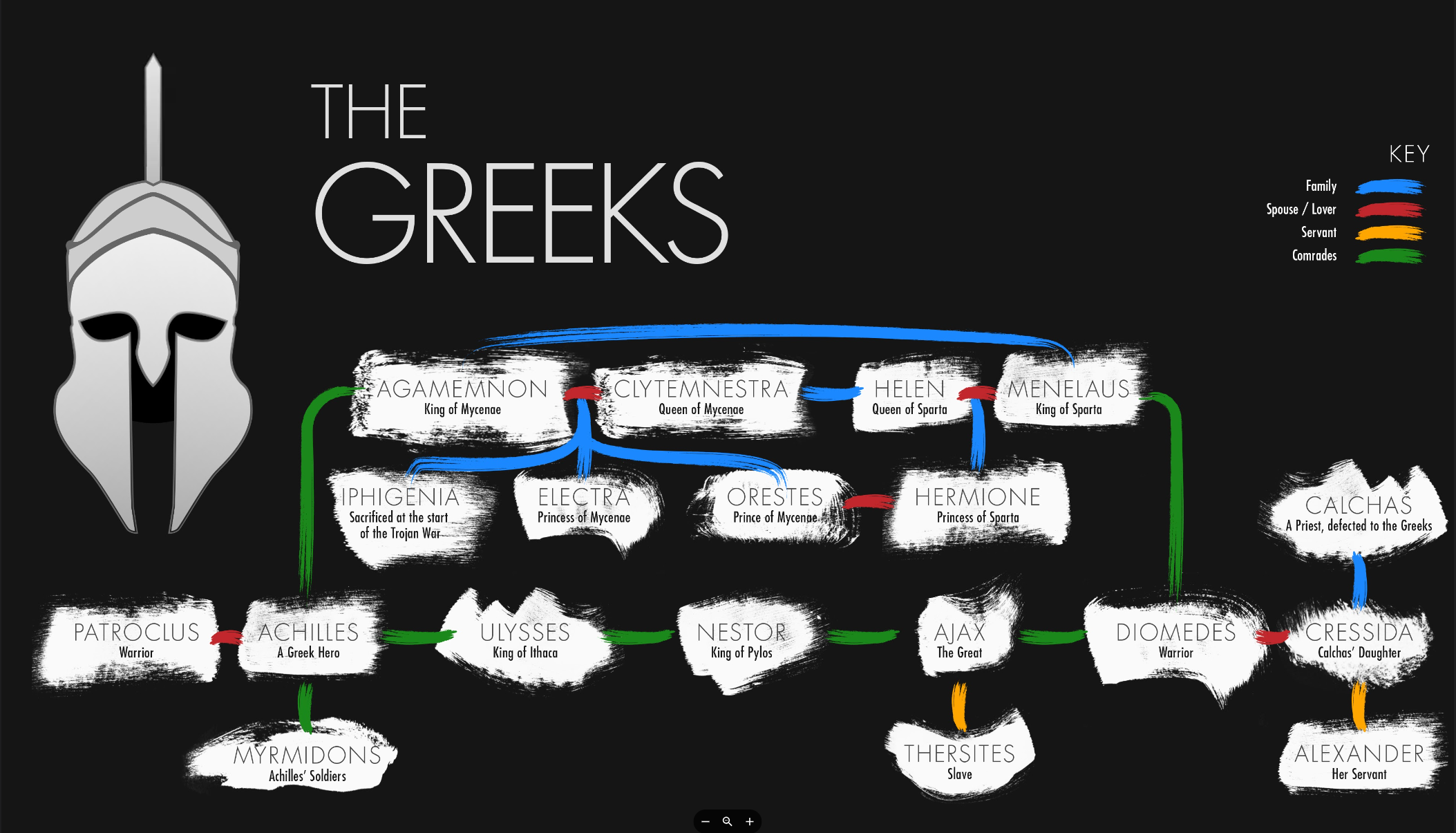
Relationships and Loyalties(?)
Sources
Troilus and Cressida stems from two storytelling traditions: Greek Myth and Medieval Romance. Shakespeare (like he does) made a mash-up of the two that spoke to the politics and cultural anxieties of his time.
-
Shakespeare likely read The Iliad in George Chapman’s 1598 Translation
Find a written summary HERE
Find a video summary HERE
-
Le Roman de Troie (The Romance of Troy) by Benoît de Sainte-Maure is the first time the Troilus and Cressida story is told in full. This 30,000 word-long Medieval Romance was the influence for a slew of T&C adaptations.
-
Italian writer Giovanni Boccaccio’s poem Il Filostrato was the main inspiration for Chaucer’s Troilus and Criseyde, which was in turn the main inspiration for Shakespeare’s play.
Summary:
Calcas, a Trojan prophet, has foreseen the fall of the city and joined the Greeks. His daughter, Criseida, is protected from the worst consequences of her father's defection by Hector alone.
Troilo sees the lovelorn glances of other young men attending a festival in the Palladium. But almost immediately he sees a young widow in mourning. This is Criseida. Troilo falls in love with her but sees no sign of her similar feelings in him, despite his efforts to attract attention by excelling in the battles before Troy.
Troilo's close friend Pandaro (Pandarus), a cousin of Criseida, senses something is distressing him. He calls on Troilo, finding him in tears. Eventually Pandarus finds out the reason and agrees to act as go-between. Troilo, with Pandaro's help, eventually wins Criseida's hand.
During a truce, Calcas persuades the Greeks to propose a hostage exchange: Criseida for Antenor. When the two lovers meet again, Troilo suggests elopement, but Criseida argues that he should not abandon Troy and she should protect her honour. Instead she promises to meet him in ten days' time.
The Greek hero Diomedes, supervising the hostage exchange, sees the parting looks of the two lovers and guesses the truth. But he falls in love with Criseida, and seduces her. She misses the appointment with Troilo who dreams of a boar which he recognises as a symbol of Diomede. Troilo rightly interprets the dream to mean that Cressida has switched her affections to the Greek. But Pandaro persuades him that this is his imagination. Cressida, meanwhile, sends letters that pretend a continuing love for Troilo.
Troilo has his fears confirmed when his brother Deífobo (Deiphobus) returns to the city with the clothes that he has snatched in battle from Diomedes; on the garment is a clasp that belonged to Criseida.
Troilo, infuriated, goes into battle to seek out Diomedes, killing a thousand men. He and Diomedes fight many times, but never manage to kill each other. Instead Troilo's life and his suffering are ended by Achilles.
-
Troilus and Criseyde is a Middle English narrative poem by Geoffrey Chaucer, often regarded as his finest work. Set during the Trojan War, it tells the tragic love story of Troilus, a Trojan prince, and Criseyde, the daughter of a Trojan priest who has defected to the Greeks. The poem explores themes of love, fate, betrayal, and the fleeting nature of happiness. Written in a poetic and philosophical style, it is a masterpiece of medieval literature.
Setting: The story unfolds during the Trojan War, blending classical mythology with medieval courtly love ideals.
Introduction of Characters: Troilus: A valiant Trojan prince and the youngest son of King Priam, who initially mocks love. Criseyde: A beautiful and intelligent widow, reluctant to fall in love due to her vulnerable position in society. Pandarus: Criseyde’s uncle and the story’s matchmaker, who orchestrates the romance between Troilus and Criseyde.
Inciting Incident: Troilus sees Criseyde at a temple and falls deeply in love. His despair is so great that Pandarus intervenes to help him win her heart.
Rising Action
The Courtship: With Pandarus’s assistance, Troilus and Criseyde exchange letters and eventually meet in secret. Their love blossoms, and they share a night of passion, promising eternal devotion.
Turning Point: Criseyde’s father, Calchas, arranges for her to be exchanged to the Greek camp in a prisoner trade. Despite their protests, Criseyde is forced to leave Troy.
Climax, Criseyde’s Departure: Criseyde promises to return to Troilus within ten days. Heartbroken, Troilus waits anxiously. In the Greek camp, Criseyde encounters Diomede, a Greek warrior who courts her persistently.
Falling Action, Betrayal: Criseyde succumbs to Diomede’s advances and does not return to Troy. Troilus learns of her betrayal through a letter, which shatters him.
Resolution, Troilus’s Fate: Devastated, Troilus seeks solace in battle and is ultimately killed by Achilles. The poem concludes with a philosophical reflection on the transient nature of worldly love and the eternal significance of divine love.
-
At 30,117 words long, Lydgate’s Troy Book is a massive achievement that took him eight years to write. Fun fact: Henry V commissioned it! The poem furnishes the background that educated medieval readers would have brought to Chaucer's poem and to Chaucer's source, Boccaccio's Filostrato.
Read some selections HERE
Early Modern Cultural Contexts
Astrology: click HERE for more
1
Early Modern English people believed that the movements of the stars and planets impacted the four humors of the body (blood, phlegm, yellow and black bile). It was so intense that Queen Elizabeth had her own Astrologer named John Dee!
The Hundred Merry Tales
2
The Hundred Merry Tales were a book of comic stories, featuring stock figures of stupid clergymen, unfaithful wives, and Welshmen. Number 32 has the humorous story of the beard that Phil mentioned