Dramaturgy Resource Guide for
A Christmas Carol
Directed by Addie Gorlin-Han
Guthrie Theater, 2026
This resource is a living document that will grow through the rehearsal process. Always feel free to check back for more information. If you would like to see additional resources here, please just reach out! lezliecross@yahoo.com

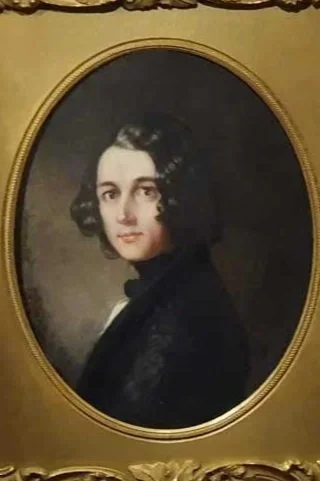
Charles Dickens in 1843, the year he wrote A Christmas Carol
Dickens hoped to write a pamphlet to draw attention to the plight of the poor - especially poor children. The result was A Christmas Carol.
I HAVE endeavoured in this Ghostly little book to raise the Ghost of an Idea, which shall not put my readers out of humour with themselves, with each other, with the season, or with me. May it haunt their houses pleasantly, and no one wish to lay it.
Their faithful Friend and Servant,
C. D.
The 1830s and 1840s were desperately bad times for the working classes, overworked, underpaid, badly fed, housed and clothed, whether in the mills or on the farms; however, conditions did improve, driven by Christian concern, and increasing sense of government responsibility and, in the first half of the century at least, fear of revolution.” (Pritchard, 6)
“I have a great faith in the poor,” [Dickens] explained in a letter of April 4, 1844. “to the best of my ability I always endeavor to present them in a favorable light to the rich; and I shall never cease, I hope, until I die to advocate their being made as happy and as wise as the circumstances of their condition, in its utmost improvement, will admit of their becoming.” (Hearn, xxxvi)
Drawing on Real Life
Charles Dickens drew inspiration from his past and the London of his boyhood.
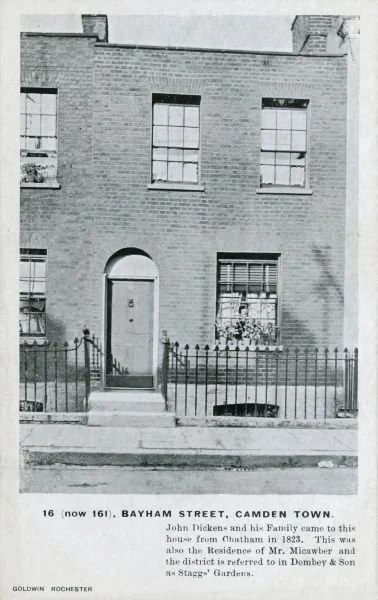
16 Bayham Street, Camden Town
Dickens’s family lived at this address in 1823. It is said to be the inspiration for the Cratchit home.
At the time, Camden was split in two, not only geographically but also culturally with the upper class around the Regent’s Park and the working class towards St Pancras.
Smaller two-storey cottages had also been erected for the less affluent.
John Forester in The Life Of Charles Dickens describes the house: "Bayham-street was about the poorest part of the London suburbs then, and the house was was a mean small tenement, with a wretched little back-garden abutting on a squalid court..."
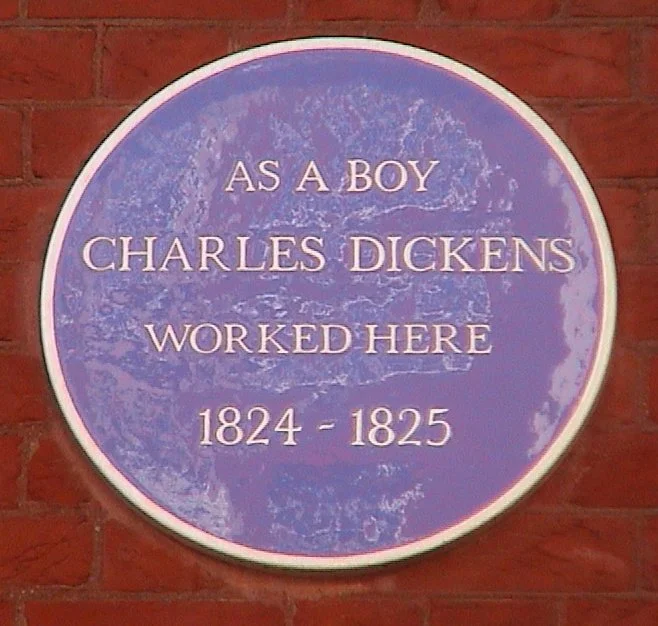
Warren’s Blacking Factory
When Dickens’s father was sent to Marshalsea Debtor’s Prison, Young Charles went to work at Warren’s Blacking Factory near Hungerford Stairs, which stood just off the Strand. There, Dickens had the tedious (and messy!) job of pasting labels on bottles of boot polish.
Read Dickens’ account of this time in John Forster’s The Life of Charles Dickens.
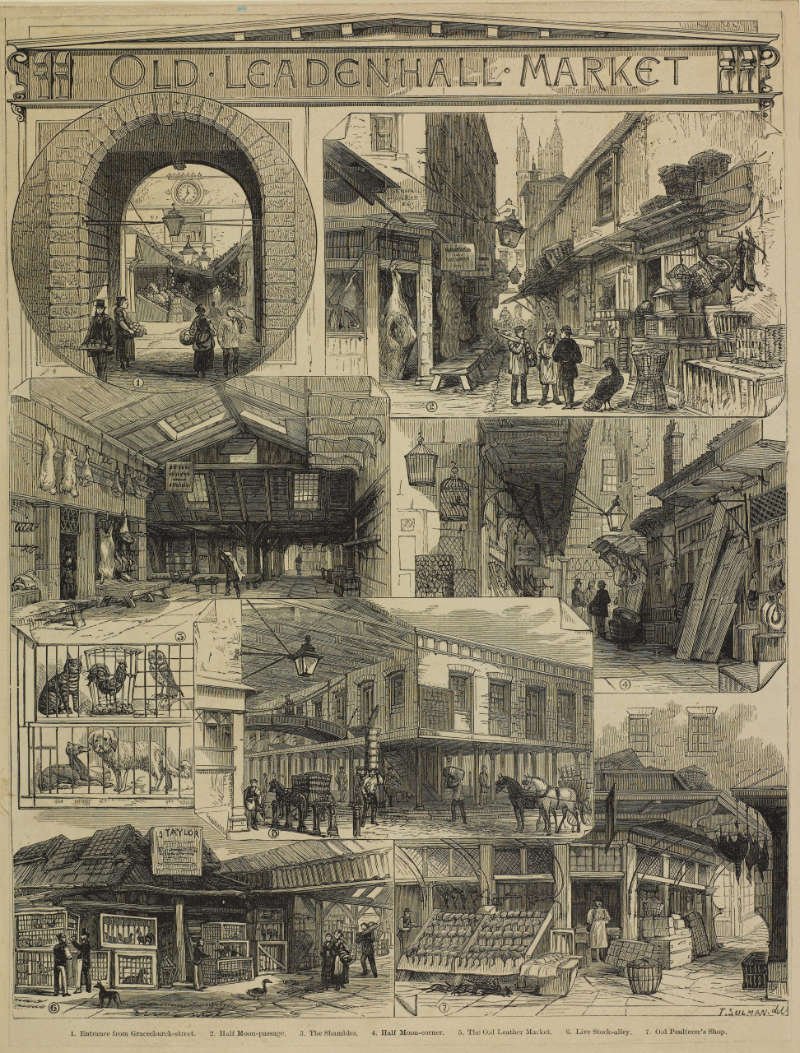
Leadenhall Market
Leadenhall Market dates back to 1321 and is situated in what was the center of Roman London. A meat, poultry and game market, it was the ideal place to buy a prize turkey. The current market (which you can visit) was redesigned in 1880 by City Architect, Sir Horace Jones, was instructed to design a ‘respectable arcade’ for the poultry market.
Explore the history HERE
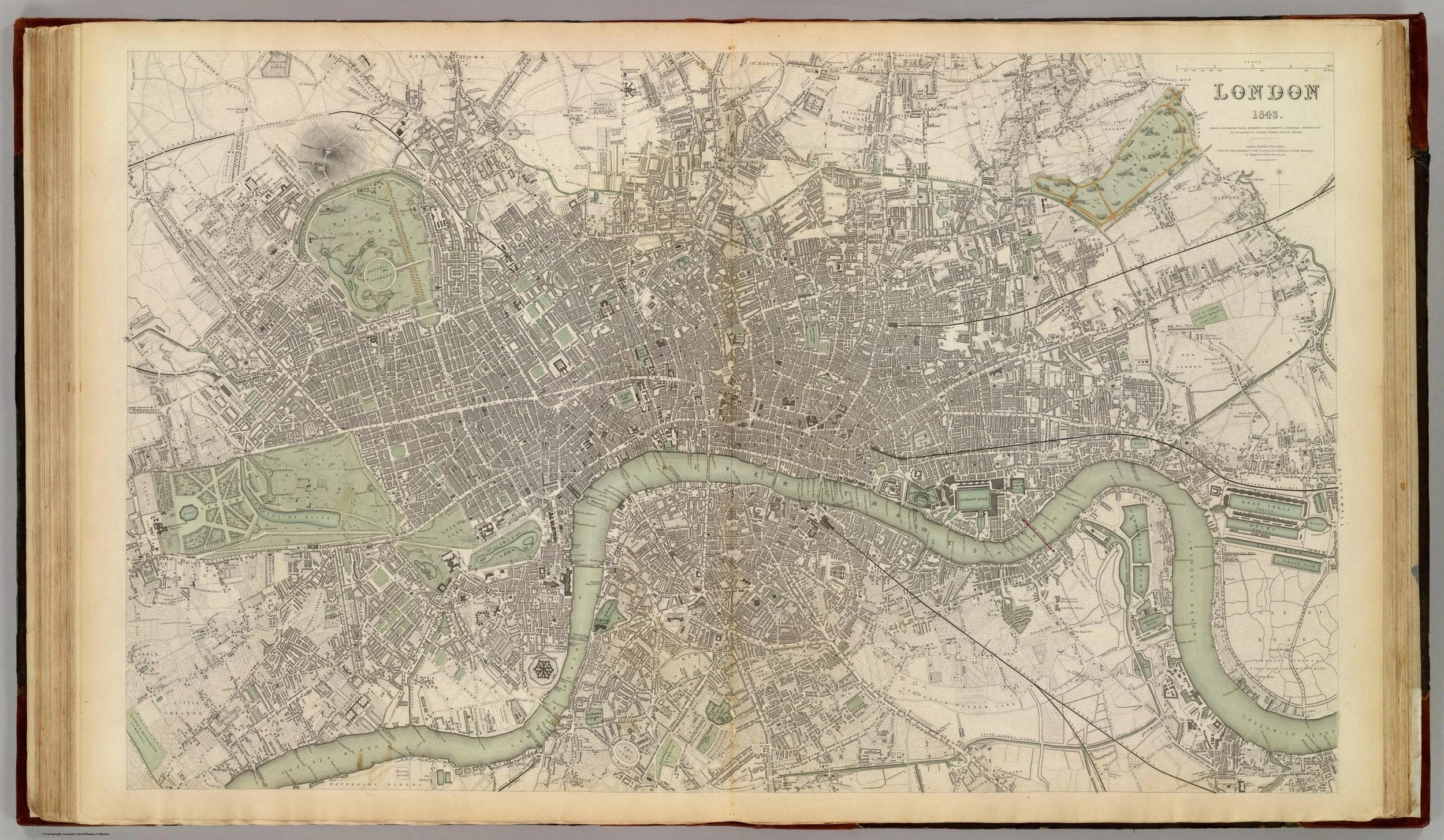
London in 1843
Zoomable version HERE
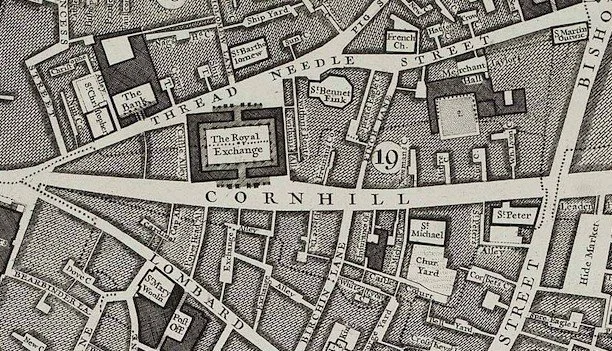
Scrooge’s (Marley’s) Office was likely near the Royal Exchange, as Bob slides down Cornhill 20 times (wheee!)
Explore more in Dickens’s Dictionary of London
A Visual Glossary of A Christmas Carol
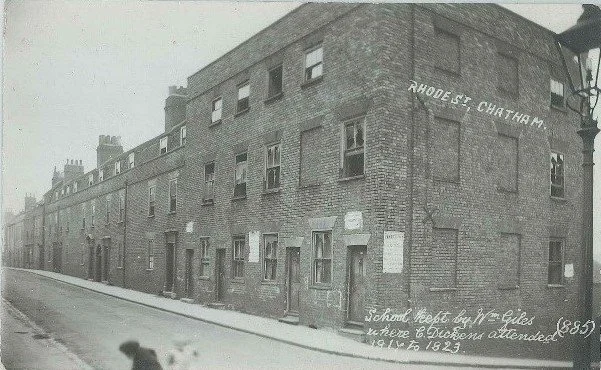
Like Young Scrooge, young Charles was separated from his family in order to complete his current terms education at William Giles’s school in Chatham.
William Giles’s School
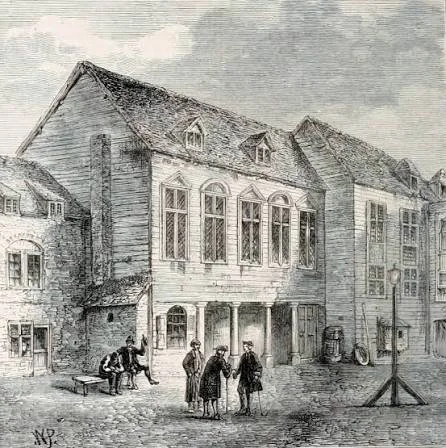
"Are there no prisons?" Those unable to pay their debts (like defaulting on your credit card bill today) might be put into debtor’s prison. Charles Dickens's father was committed to Marshalsea Prison (shown) in 1824 for failure to pay his debts.
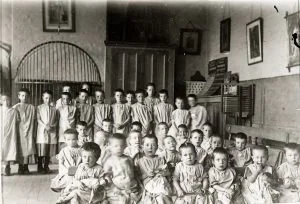
"And the workhouses? Are they still in operation?" By the 1830’s the majority of parishes had at least one workhouse. Poor Laws dictated that to receive aid, people had to work. The conditions were harsh and treatment was cruel with families divided, forcing children to be separated from their parents.
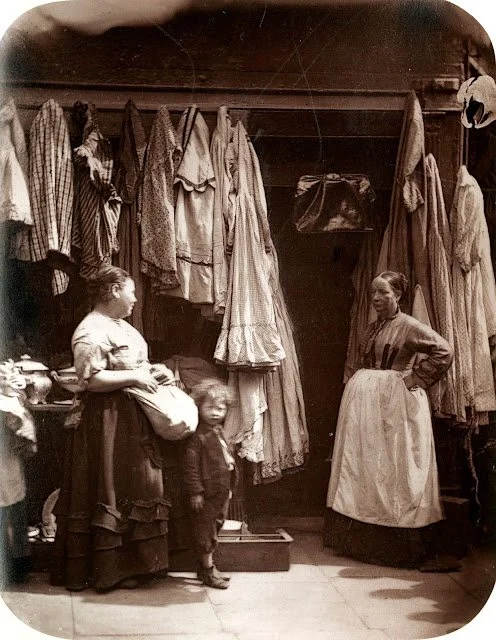
"The Old Clothes of St. Giles" The Victorians were very much into thrifting. Clothes had a continued life through reselling until they were threadbare and picked up by Rag and Bone men. Scrooge's best shirt would have a long life after he was gone.
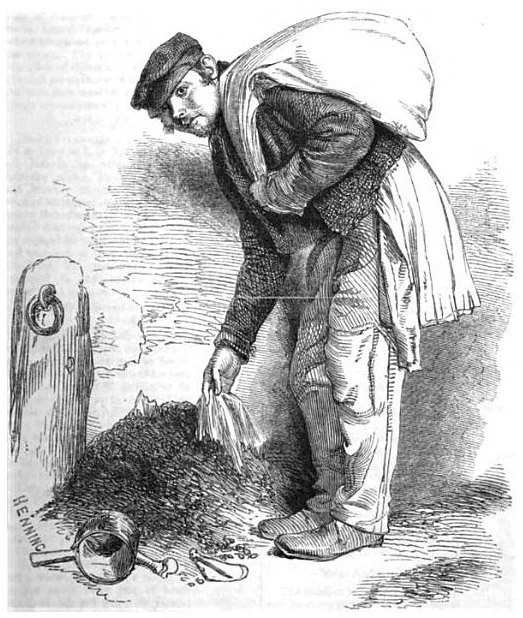
In the 19th Century, Rag and Bone Men collected unwanted materials (or trash) to be sold for reuse.
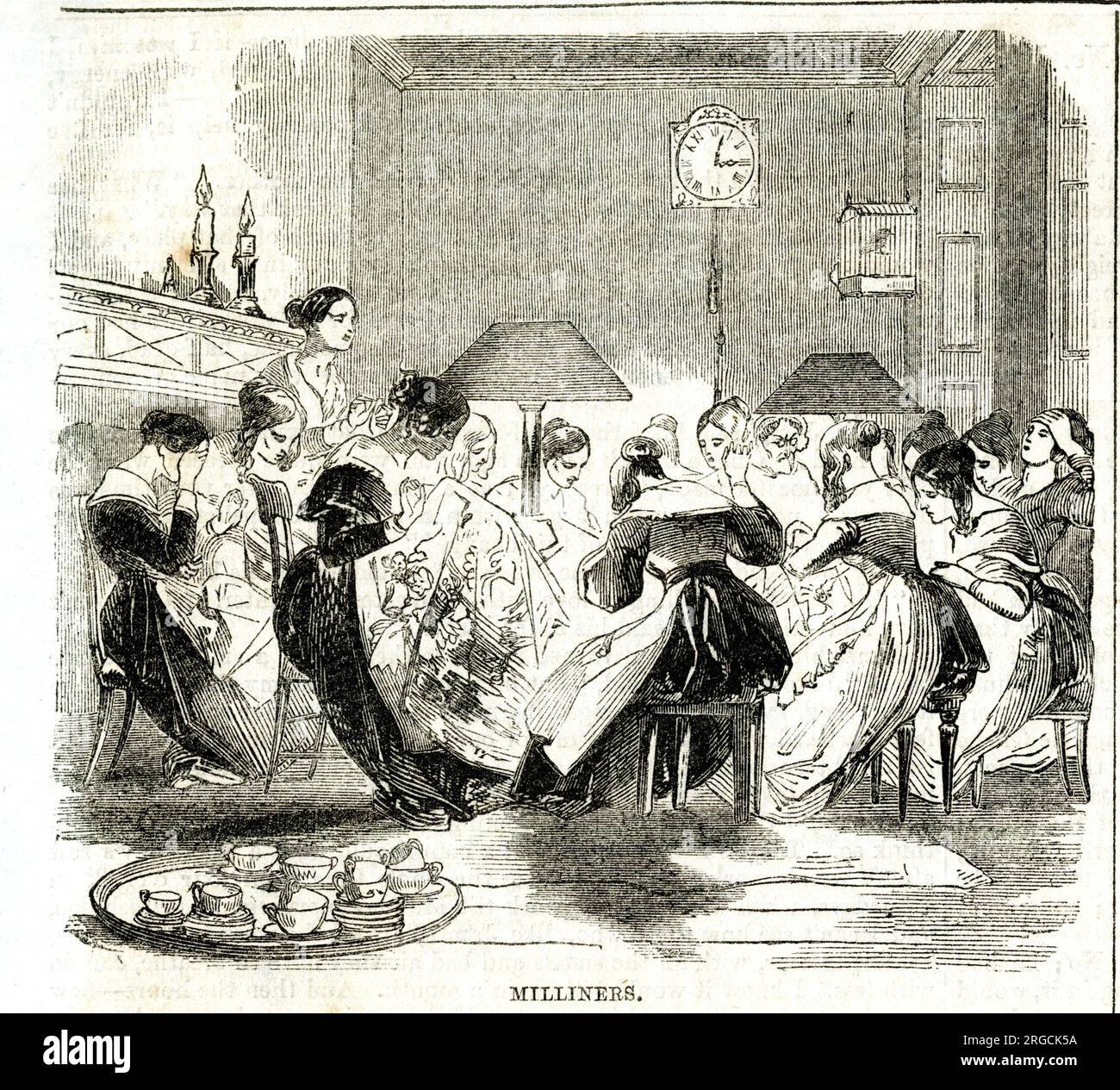
"Milliners, Slaves of the Needle" Working in a milliners shop, like Martha, meant long hours (sometimes 12!) sewing hats for upper-class ladies.
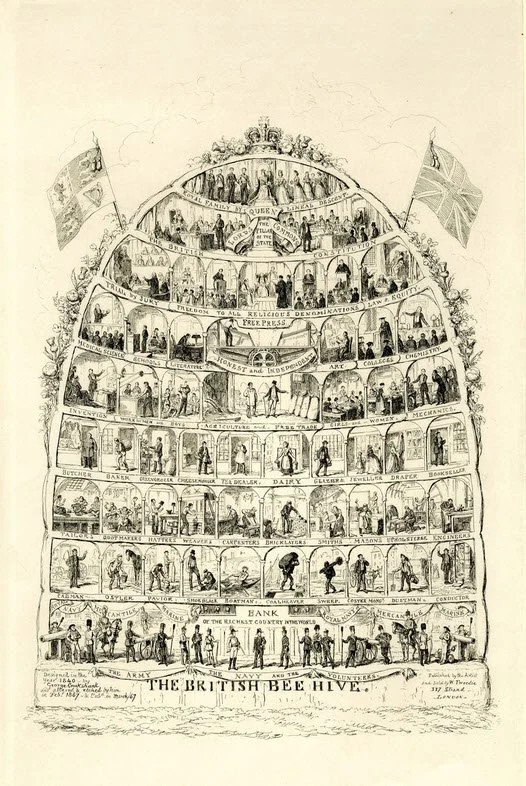
"The British Beehive" by George Cruikshank. British society is a hierarchical beehive, where each member has their designated place and role within the larger structure of industry and commerce. Where does your character land?
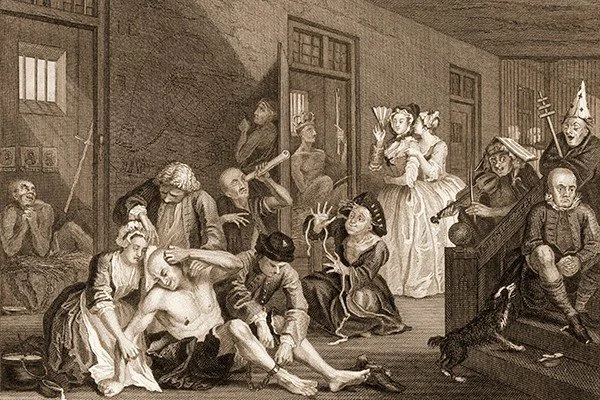
"I'll retire to Bedlam." Bethlehem Royal Hospital (Bedlam) was London's main mental hospital from the 13th Century. For a while there, a fun day out was to visit the lunatics, like going to the zoo. The place became so notorious the word came to mean madness and chaos.
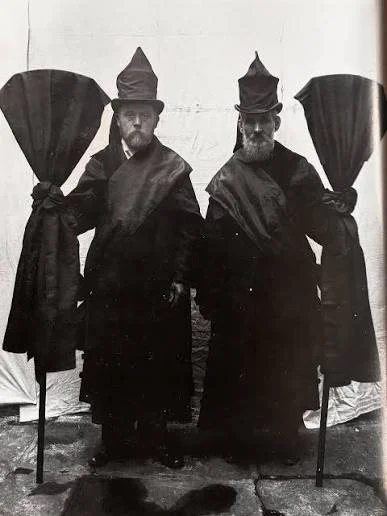
The Victorians had a number of death rituals. A proper funeral (with lunch) was one. This was an expensive proposition, so people paid into a funeral fund for a lot of their lives (this was the birth of the Insurance Industry!). Funerals were also a time of generosity. Alms would be left around the gravesite, to help deter graverobbers. Did Scrooge leave money for all of this? Or is his grave in danger?
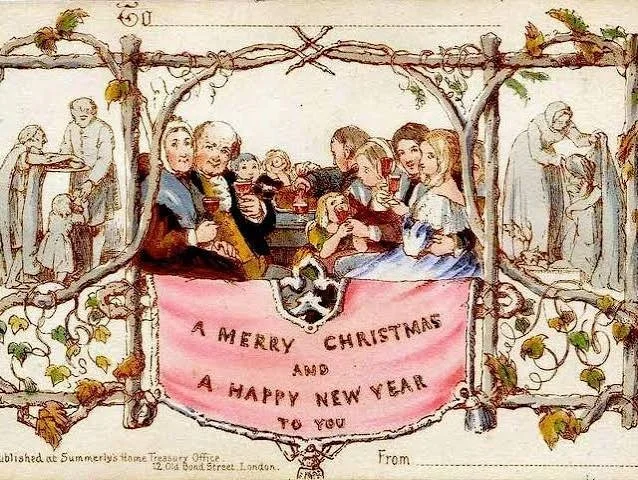
"...have the whole day." There were three days in the year "Christmas, Easter, and Whitsuntide," in which "the bulk of the working classes secure from three days to a week’s holiday, holding revels in parks and other places during the day, and filling the theatres and other public places of amusement at night.” Thomas Wright, Some Habits and Customs of the Working Classes, London 1867
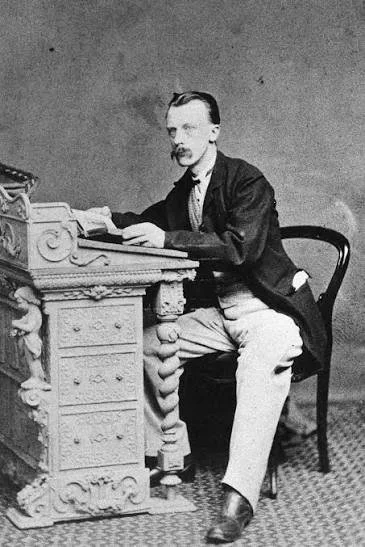
Clerks, "were middle-class, because they used their brains and not their hands." "There were over 20,000 ‘commercial clerks’ in the 1841 census. Charles Booth estimated the number of ‘commercial clerks, accountants and bankers’ at 44,000 in 1851, 67000 in 1861, and 119,000 in 1871." (Picard, 95, 96)
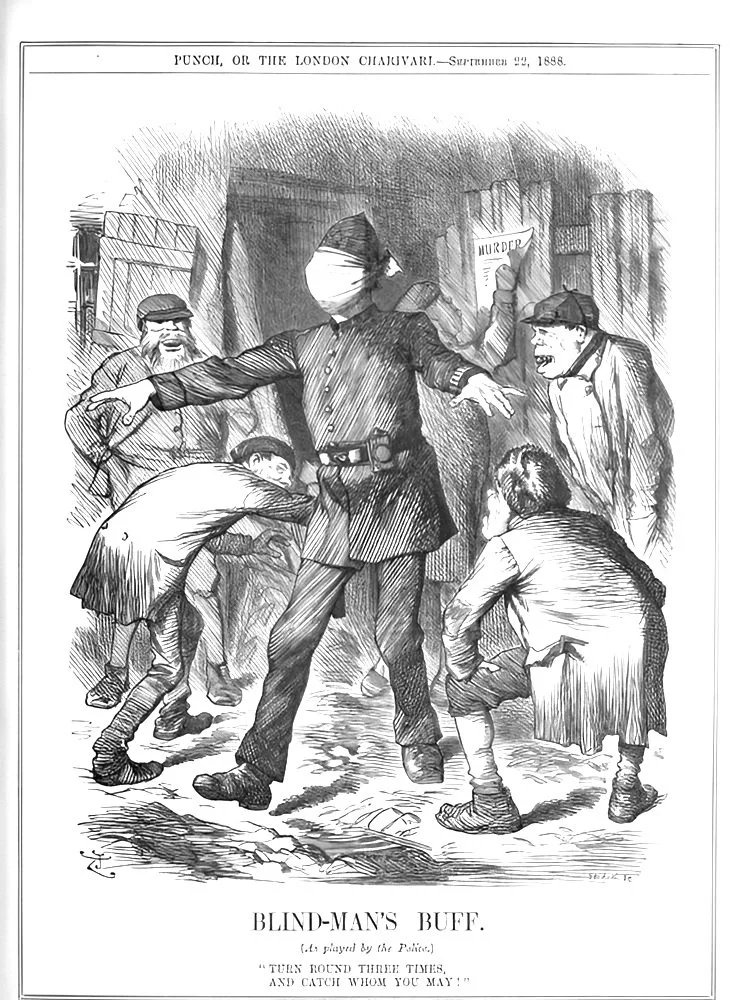
"Blind Man's Buff" (not bluff) One player is blindfolded and then disoriented by being spun around several times. The other players, call out to the “blind man,” dodging away and buffeting (hitting) him, hence “buff.” "Bluff" became the name once the hitting part was no longer part of the game. (Britannica)
A Christmas Carol Glossary
-
This was evidentially a Victorian method of killing Vampires! So we can see what Scrooge thinks of those who have “Merry Christmas” on their lips!
-
in this instance, “intercourse” means the social exchange of thoughts and feelings Scrooge has shared with the spirits and the people in his life.
-
Back when nails were hand made, they were often reused. Door nails were hammered over and down into the wood, making them unable to be reused and, hence, dead.
-
In the old money, a half crown was about 5 shillings. There were 20 shillings in a pound. An 1843 pound is worth about $170, so a half crown would be worth about $50. Not a bad tip for a turkey delivery!
-
aka “I am certain” or “I know for sure”
-
this seems to be a Dickens original phrase! The “them” here are Scrooge’s senses, which have become “cheats” or deceitful tricksters because of the bit of beef, mustard, and/or potato.
-
Belle is releasing Scrooge from their engagement, nicely breaking up with him
-
The word originally meant “to squeeze,” which is what he did to anyone who owed him money. This is why we call him “A squeezing, wrenching, grasping, scraping, clutching, covetous, old sinner!”
-
an executor is a legal representative who manages a deceased person's financial affairs and distributes their property. As Marley's only friend, Scrooge inherited all of his assets. (score!)
-
In today’s money three pounds is about $500, four pounds is about $680. See this currency converter.
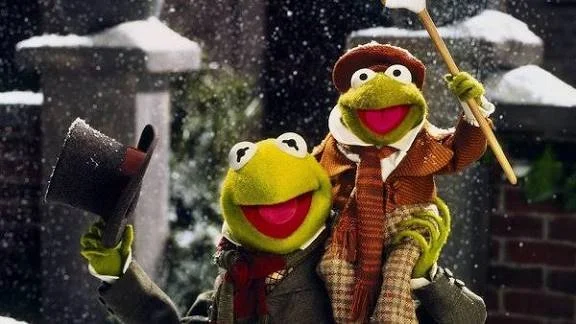
What’s up with Tiny Tim?
Generations of doctors have put forward theories as to Tiny Tim’s sickness. Here are the symptoms we know:
Walks with a crutch, has “limbs supported by an iron frame”
Potentially fatal, but Scrooge is able to turn that around (he did NOT die)
Given all that, here are some potential diagnoses:
Rickets. Polluted air and lack of nutrition and sunshine in Victorian London gave 60% of children rickets, a disease which causes bone deformities and stunted growth.
Tuberculosis. 50% of children also had signs of tuberculosis, which could morph into Spinal Tuberculosis.
Renal tubular acidosis. RTA occurs when there is too much acid in your blood as your kidneys aren’t functioning properly.
All of these can be cured with better living conditions, and access to good food filled with vitamins, especially vitamin D (thanks for the orange Nephew Fred!!)
“A recommended treatment plan would have included (1) general measures such as country air and exercise, and fish oils such as cod and halibut (vitamin D), and (2) specific treatments of tonics (containing combinations of belladonna, opium, sodium bicarbonate, sodium citrate, and potassium chloride) emphasizing alkalis, and splinting and bracing the limbs.” ~D.W. Lewis
The Carol Carols
-
A traditional carol, included in Sandy’s Christmas Carols Ancient and Modern (below). An early version of the carol can be found in an anonymous manuscript dating from the 1650s.
According to Michael Patrick Hearne, it was “probably the most widely sung Christmas carol at the time
-
One of the younger carols on the list, traced back to the early 19th Century. Today’s version comes from Sharp's English Folk-Carols (1911).
-
An original song for our production.
-
An original song for our production. Perhaps an allusion to Psalm 37:23–24 "All through this hour/Lord be my guide/And by Thy power/No foot shall slide"
-
An original song for our production.
-
A carol stemming from Welsh tradition, dating back to the 16th Century. The modern the English lyrics were written by the Scottish musician Thomas Oliphant in 1862.
-
Lyrics adapted from “The Lincolnshire Poacher” a ballad originating in the 18th Century.
-
Also known as "All Hail to the Days," it is a carol which originated as a broadside in 1625.
-
Wassail songs are a key part of “wassailing”, or the practice of going door to door, singing carols, wishing good health and exchanging gifts, snacks, and drinks from the wassail bowl
-
A traditional carol from the 17th Century, included in Sandy’s Christmas Carols Ancient and Modern (below)
-
One of the original songs in our production
-
Also known as "Here We Come A-wassailing" or "Here We Come A-Christmasing", it is a traditional carol sung while wassailing. Hundreds of versions of wassailing songs have been collected over the centuries.
-
A traditional carol from the English West Country. The popularity of the song jumped in 1935 when a new version by Arthur Warrell was published by Oxford University Press.
Explore more of the Carols of Dickens’s England in William Sandy’s Christmas Carols Ancient and Modern (1833)
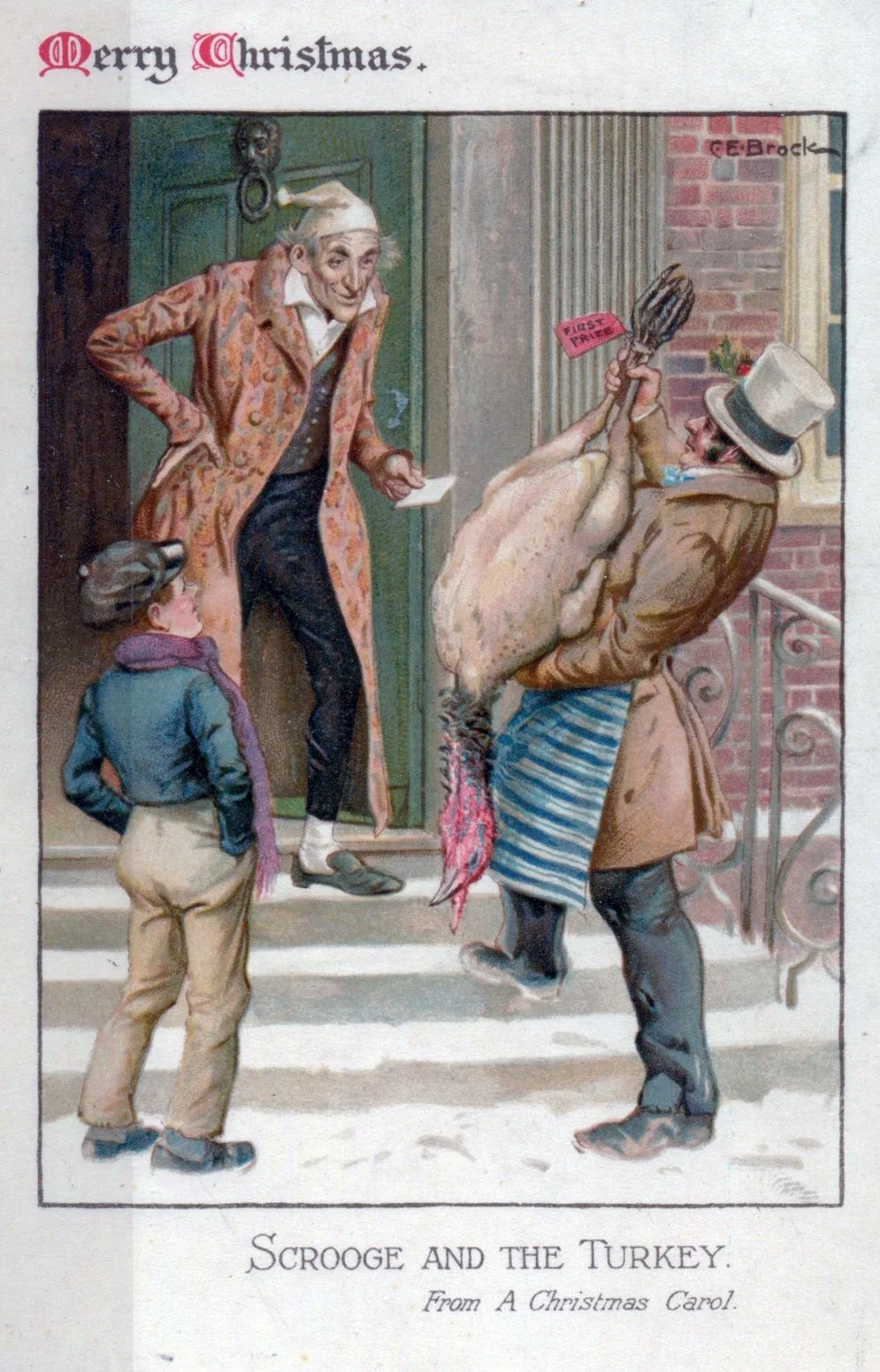
Goose vs Turkey
Roasted goose has been a traditional Christmas food in England for hundreds of years. Turkeys, on the other hand, are an imported food from the Americas and only began being eaten in England during the 1500s, and then only by the very wealthy. Turkey had become more commonplace by the Victorian Era, but it was still an expensive (imported) luxury compared to a goose.
Getting either bird for your Christmas table was not an easy feat:
“Working-class Victorians could join a ‘goose club’, a savings organisation run by pub landlords where one could put a shilling towards a goose every week to save up for a tasty bird. When it was time to collect your goose, those who had paid into the club would go to the pub to claim their meat, their names being drawn from a hat. The goose would be taken home and prepared for cooking, before being taken to the bakers for roasting. On Christmas morning, the baker would see a queue assembled of those collecting their prize.” ~ Eleanor Doughty
Learn More and even More HERE
Make your own Christmas Pudding
In my humble opinion, Dame Mary Berry (host of early seasons of Bake Off) has the best recipe.
Don’t forget the custard!
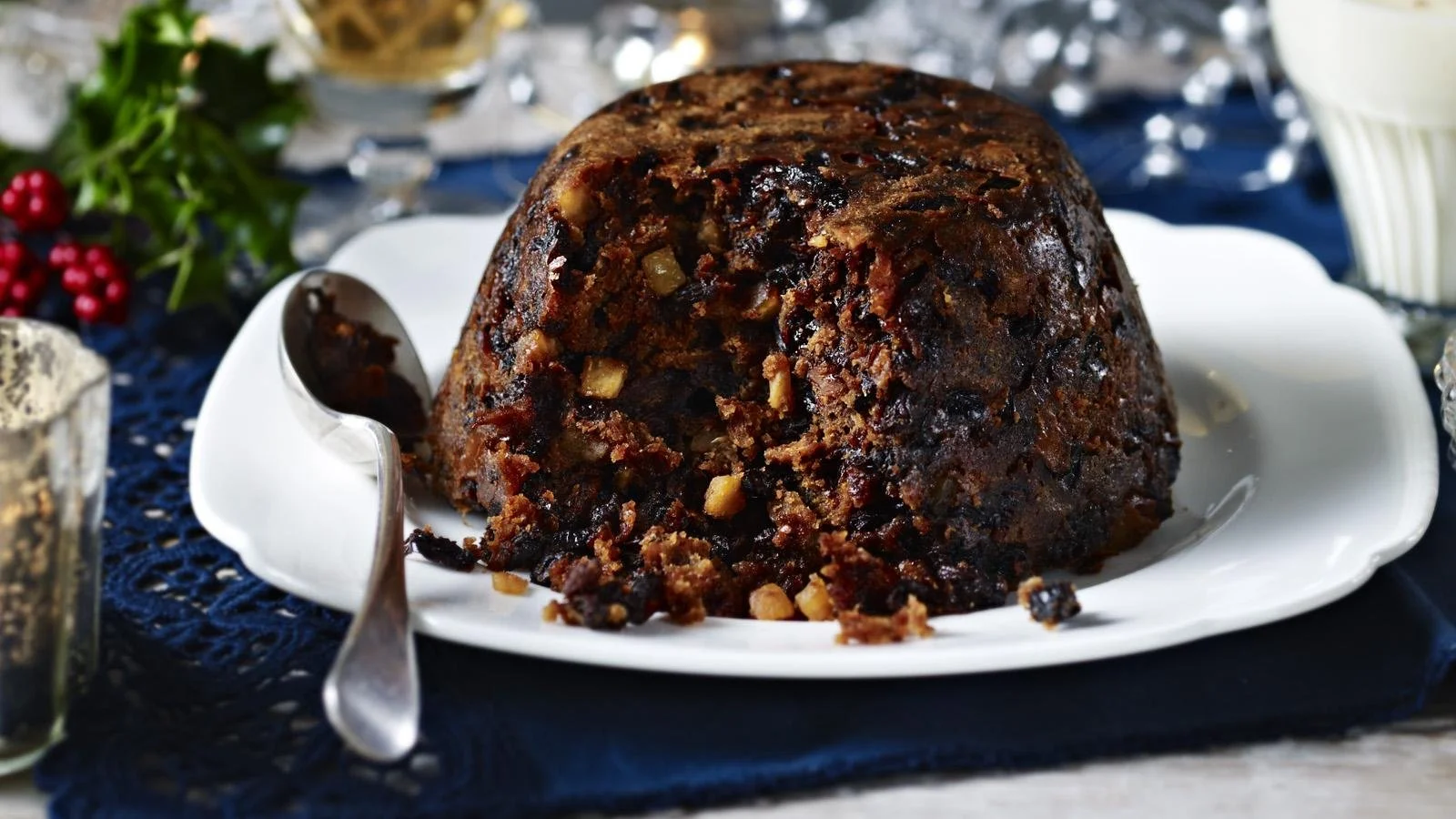
*Please note the number of exotic (and expensive!) ingredients Mrs. Cratchit would need to have sourced to make this for her family (oranges! spices! dried fruit!)
Scrooge’s Economics
Drawn from the ideas of English philosophers and economists Jeremy Bentham and John Stuart Mill, utilitarianism encourages actions that lead to the greatest good for the greatest number, ignoring the plight of the individual.
The consequences of an action show if it is morally right or wrong. This means that the right thing could be done by an actor with bad motives (and vice versa).
Utilitarianism Named for Thomas Malthus and drawn from his 1798 Essay on the Principle of Population, the theory espoused that population growth will outpace the supply of food.
That is why someone like Scrooge might want to “decrease the surplus population.”
MalthusianismOpposing Malthus, J.B. Say posited that production of a product creates demand for another product by providing something of value which can be exchanged for that other product.
In this market economy, population growth will spur the economy.
Say's lawSocial Structures and Money
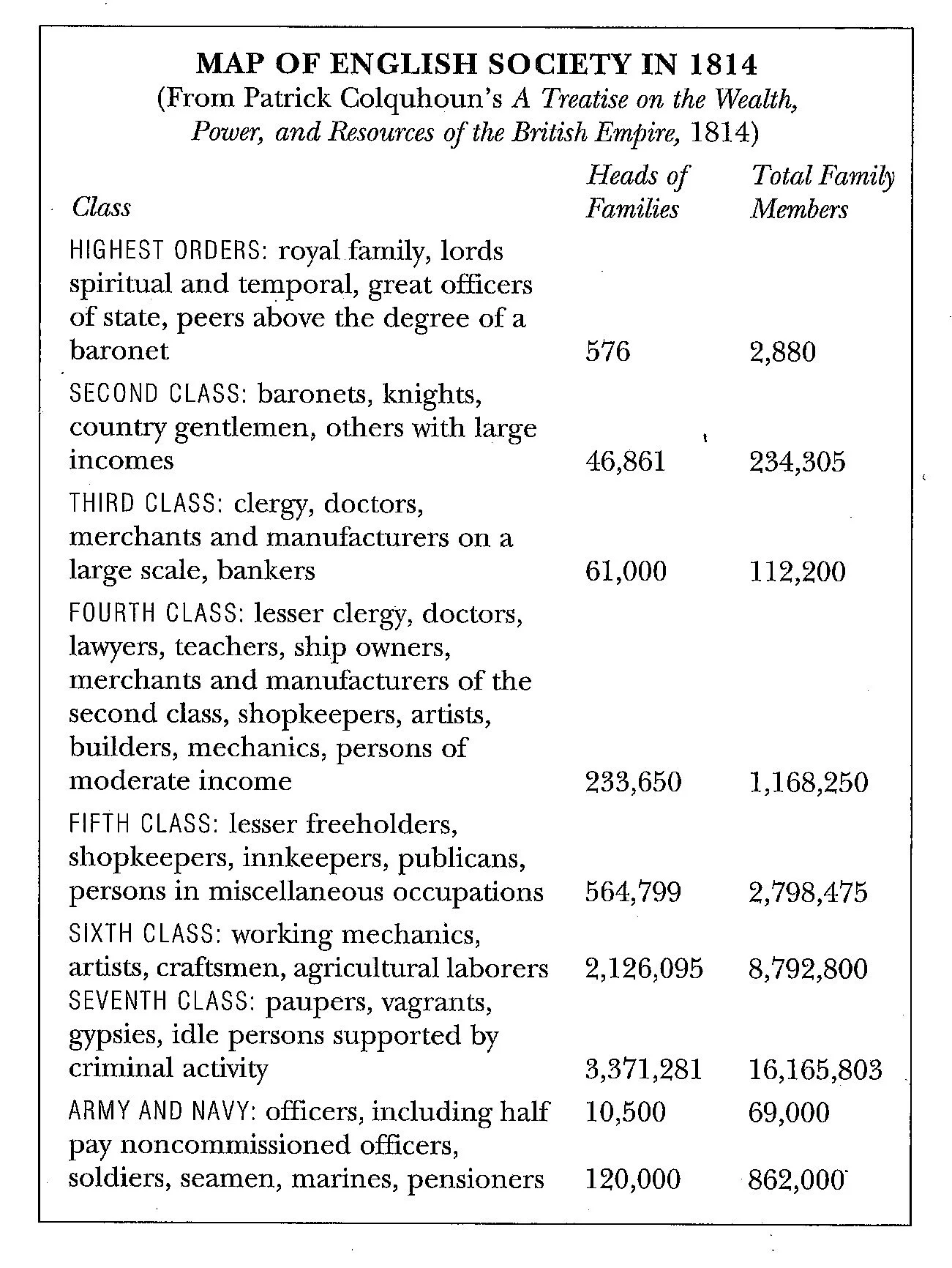
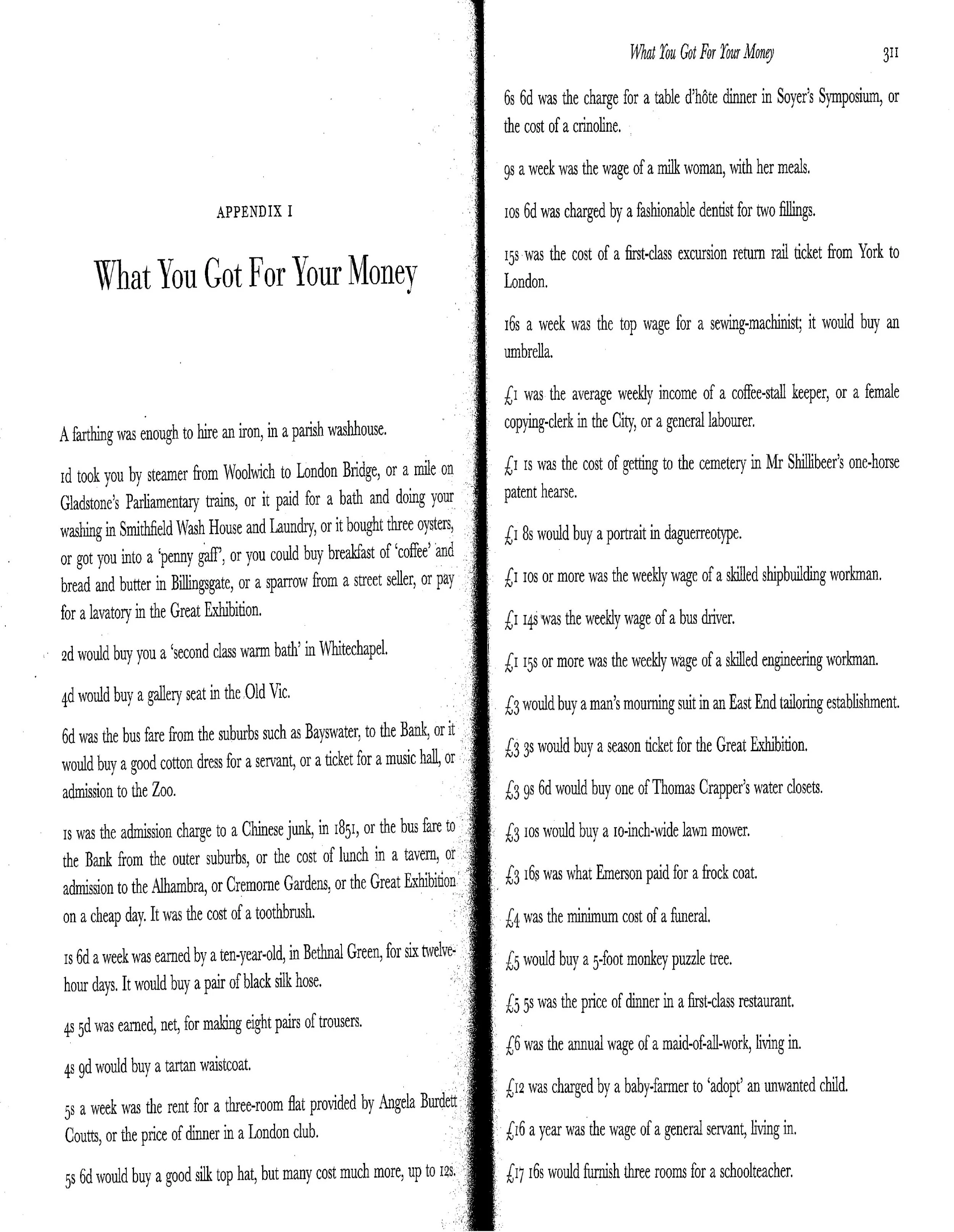
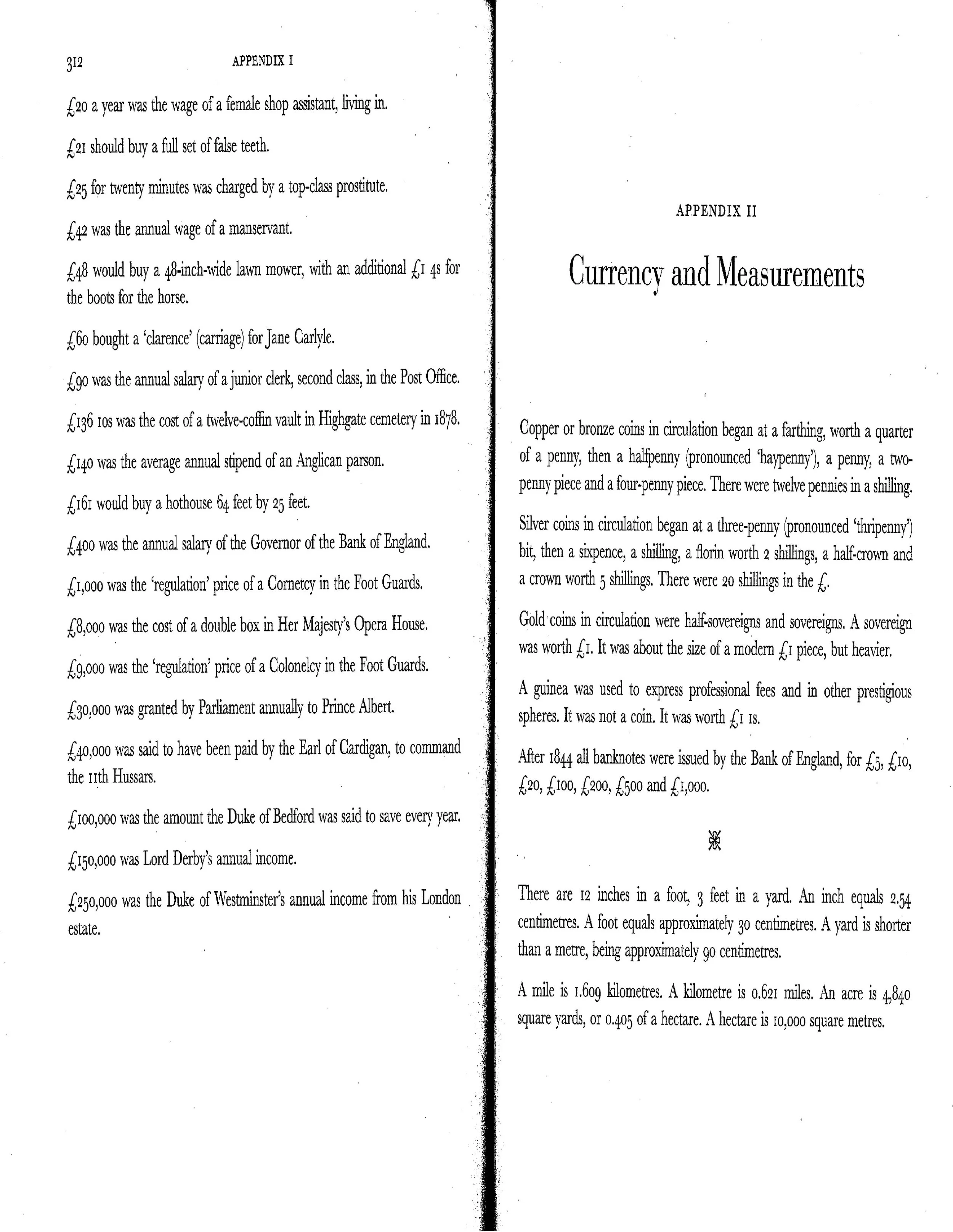
Bibliography for Further Reading
Davis, Paul. The Lives and Times of Ebenezer Scrooge. Yale University Press, 1990.
Epstein, Norrie. The Friendly Dickens. Penguin Books, 1998.
Hearn, Michael Patrick. The Annotated Christmas Carol. W. W. Norton, 2004.
Hughes, Kristine. The Writers Guide to Everyday Life in Regency and Victorian England From 1811-1901. Writers Digest Books, 1998
Picard, Liza. Victorian London: The Tale of a City 1840-1870. St. Martin’s Press, 2006.
Pritchard, R.E. Dickens’s England: Life in Victorian Times. The History Press, 2009.
Werner, Alex and Tony Williams. Dickens’s Victorian London 1839-1901. Ebury Press, 2012.